Looking Back: The Making of BIO5
How long‑term commitment to collaborative research was shaped by university leadership and the support of Thomas and Irene Keating.

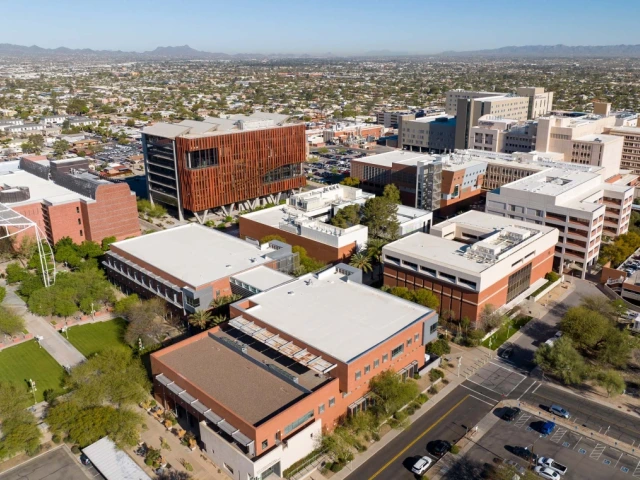
Thomas W. Keating Bioresearch Building
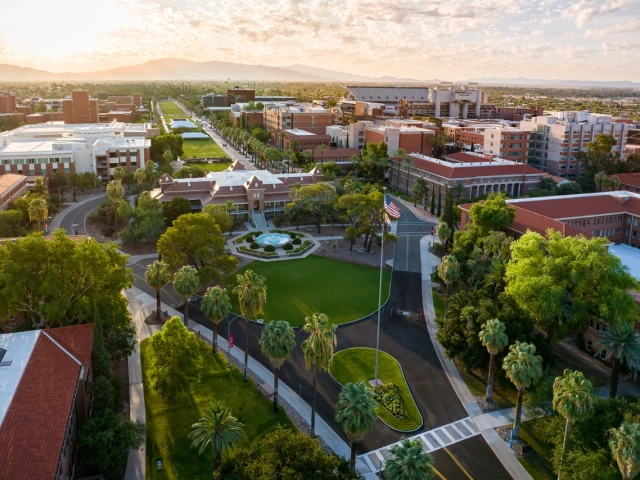
The BIO5 Institute at the University of Arizona marks its 25th anniversary this year as a center for interdisciplinary bioscience research focused on real‑world biological and public health challenges. Founded on the idea that major scientific advances often occur at the intersection of disciplines, BIO5 brings together researchers from agriculture, engineering, medicine, pharmacy and science to address issues such as disease, aging, food and water security, and population health.

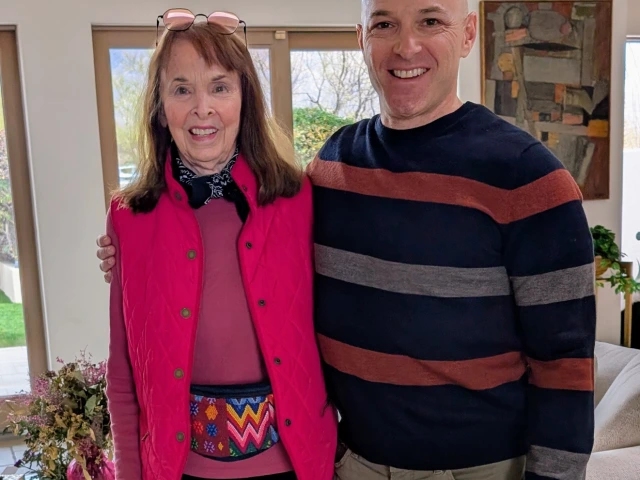
Irene “Reenie” and Thomas W. Keating
The institute emerged through the leadership of then‑University President Peter Likins and the early support of longtime university volunteers and donors Thomas W. ’00 and Irene “Reenie” Keating. Likins believed the university needed both a physical space and a collaborative culture that removed traditional academic barriers. His view was that the most important scientific progress would not come from strengthening individual disciplines alone, but from intentionally connecting them.
The Keatings understood this approach and provided critical early funding that helped turn the concept into reality. While private support launched BIO5, long‑term viability required public investment. Likins, working with Arizona State University President Michael Crow and the Arizona Board of Regents, successfully advocated for state funding dedicated to bioscience research across Arizona’s public universities. This support helped ensure BIO5 could sustain long‑term research with public benefit.
BIO5 is housed in the Bioscience Research Laboratories and the Thomas W. Keating Bioresearch Building, completed in 2006 near the university’s health sciences campus in Tucson. The building was designed to support collaboration rather than departmental separation, enabling teams to work across fields on complex problems. BIO5’s mission centers on interdisciplinary research, translation of discoveries into practical applications, and the education and training of the next generation of scientists.
For over two decades, BIO5‑supported research has contributed to advances in areas including infectious disease, chronic illness, biomedical technology and agricultural resilience — work with direct implications for public health and community well‑being. By linking laboratory science with clinical and applied research, the institute has helped shorten the path from discovery to real‑world impact.
Thomas Keating’s long connection to the U of A began after an early attempt at college and six months of National Guard service. After struggling first at Menlo College and later at the U of A, he left in 1962 to work for his family’s company and ultimately built American Protective Services into a national leader over a 38-year career. He was reintroduced to the U of A at Homecoming in 1987, and he became involved as a volunteer and donor, serving on multiple boards and supporting numerous programs. After moving part‑time to Tucson, he returned to finish his degree, graduating in 2000 with a bachelor of science in agriculture.
“My kids had their degrees, and I had 35 units. I wanted to graduate before I was 80,” Keating says. “It was a great period in my life, and I really, really value that. College-level kids are a joy to be around.”
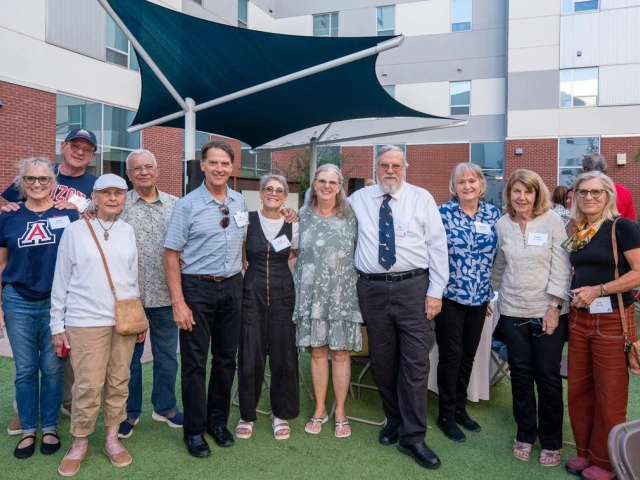
Keating and his wife, Reenie, have remained actively involved in campus life and philanthropy, supporting students, research and academic programs. They support hands‑on engagement with students through the Keep Engaging Youth in Science (KEYS) internship and have established the Keating Family Professorship, an annual faculty award.
University leaders credit the Keatings’ sustained involvement, along with institutional leadership, as essential to BIO5’s longevity. After 25 years, the institute stands as a model for how interdisciplinary research can advance science while addressing pressing public health challenges.